Quick answer
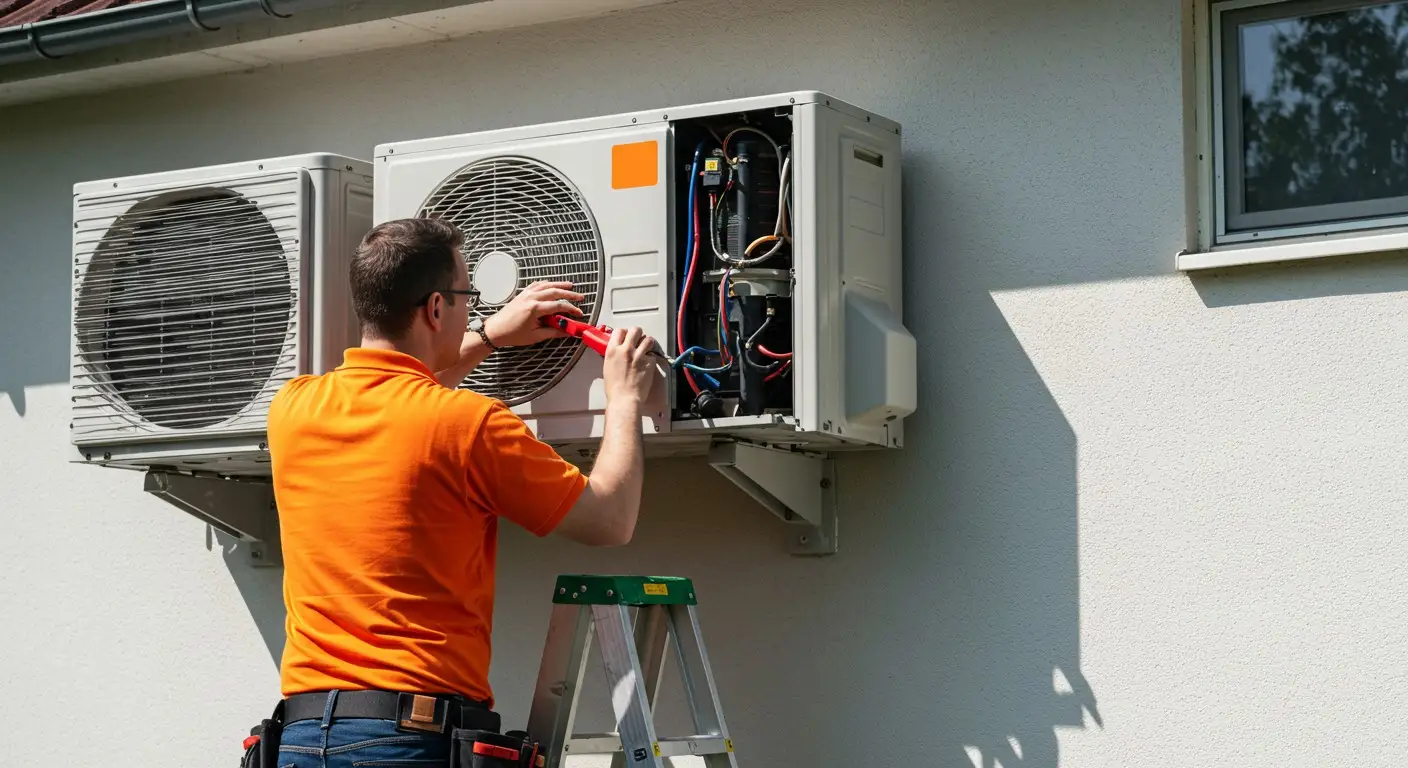
Sugar Land AC Pros diagnoses and repairs residential AC systems that will not cool, will not start, cycle abnormally, freeze, leak water, or develop weak airflow. Service is available by appointment in Sugar Land, Richmond, Missouri City, and Stafford; diagnosis comes first because similar symptoms can have different electrical, airflow, drainage, control, or refrigerant-circuit causes.
AC problems we diagnose
A useful repair begins with the symptom but does not stop there. Replacing a part based only on a warm vent, an iced line, or a tripped breaker can miss the condition that caused the failure. The inspection should connect what the homeowner notices to testable system conditions.
| What you notice | Conditions that may need to be checked | Safe next step |
|---|---|---|
| Air is warm or not as cool as usual | Thermostat mode, outdoor-unit operation, airflow, coil condition, electrical components, or refrigerant-circuit performance | Confirm the thermostat is set to cool and the filter is not visibly blocked; request diagnosis if the problem remains |
| System will not start | Thermostat power or settings, service disconnects, breakers, safety switches, condensate controls, or failed electrical components | Check normal thermostat settings and the home breaker once; do not repeatedly reset a breaker |
| Airflow is weak | Filter restriction, blower operation, coil restriction, dampers, return-air limitations, or duct leakage | Replace only a homeowner-serviceable filter if needed; schedule service when airflow stays weak |
| Ice appears on a line or coil | Restricted airflow, blower trouble, coil condition, or refrigerant-circuit performance | Turn cooling off and allow the system to thaw; do not chip away ice or keep forcing the unit to run |
| Water appears near indoor equipment | Blocked or damaged drain components, pan issues, frozen-coil thawing, or condensate-switch operation | Turn the system off if water threatens ceilings, flooring, or equipment; arrange an inspection |
| System starts and stops frequently | Thermostat location or controls, airflow restriction, electrical faults, equipment condition, or capacity mismatch | Record the cycle behavior and request diagnosis rather than changing multiple settings |
| A new noise or odor develops | Loose or failing moving parts, electrical overheating, debris, drain conditions, or another component fault | Shut the system off for burning odors, smoke, sparking, or severe mechanical noise |
These are diagnostic possibilities, not a remote diagnosis. The actual repair recommendation should follow an on-site evaluation of the residential system.
What AC repair service covers
The repair visit focuses on the complaint and the connected equipment conditions. Depending on the symptom and accessible system design, diagnosis may include:
- thermostat settings, power, wiring, and control response;
- breaker, disconnect, contactor, capacitor, relay, motor, and other relevant electrical checks;
- filter condition, return and supply airflow, blower operation, and accessible coil condition;
- indoor and outdoor equipment operation;
- condensate pan, drain line, trap, and float-switch conditions;
- temperature performance and system cycling;
- refrigerant-circuit indicators when the symptom supports that evaluation; and
- visible duct or insulation issues that could affect the reported comfort problem.
The work described here is residential AC diagnosis and repair. Commercial-only equipment and commercial HVAC projects are excluded. Major duct fabrication is also outside a standard repair scope; if the diagnosis points to a substantial duct correction, it should be separately defined.
When an AC problem is urgent
Turn the system off when continued operation could increase damage or create a safety concern—for example, water is reaching a ceiling or electrical equipment, ice continues to build, a breaker repeatedly trips, the unit produces a burning odor, or there is smoke, sparking, or violent mechanical noise. For smoke, fire, or an immediate electrical hazard, use the appropriate emergency service rather than waiting on a routine HVAC appointment.
Sugar Land AC Pros does not promise emergency or after-hours availability on this page. Call (346) 683-3844 to ask about current scheduling. While waiting, avoid opening equipment panels, handling capacitors or wiring, adding refrigerant, or repeatedly restarting a failing system.
Repair process
- Describe the failure. Explain when it started, whether cooling stopped suddenly or declined gradually, and whether you saw water, ice, tripped breakers, or unusual sounds or odors.
- Inspect and test. The technician follows the symptom through the relevant controls, electrical operation, airflow, drainage, heat-transfer surfaces, and equipment sequence.
- Identify the likely cause. Findings should separate the failed component from contributing conditions when both are present.
- Review the repair scope. Before authorized work begins, review what is being repaired, what is excluded, and whether any system condition could change the recommendation.
- Complete authorized work. Repair proceeds within the agreed residential scope.
- Check operation. The system is run to verify the repaired function and to note any remaining limitation or separate issue.
Local cooling conditions
Sugar Land-area homes operate in a hot, humid climate where long cooling cycles and heavy condensate production can expose marginal components, restricted airflow, and drain problems. Attic-installed air handlers and attic duct runs can also make access, heat gain, insulation condition, and drainage routing important parts of diagnosis.
Home age alone does not identify the cause. An established Sugar Land home may contain equipment and ductwork from different renovation periods, while a newer home may have a room-specific comfort issue tied to window exposure, control settings, airflow balance, or duct layout. Diagnosis should follow the equipment and current conditions in the home.
Visit the Sugar Land service-area page for local coverage. Residential AC repair is also offered by appointment in Richmond, Missouri City, and Stafford.
What affects AC repair cost?
The price of an AC repair cannot be established responsibly from a symptom alone. “Not cooling” might involve a control setting, drainage safety switch, airflow problem, electrical component, motor, refrigerant-circuit fault, or compressor-related issue, each with a different scope.
Repair estimates may be affected by:
- the diagnostic work needed to isolate the failure;
- the failed part and any connected condition that caused or contributed to it;
- part availability and compatibility;
- equipment location and safe access;
- electrical, airflow, drainage, or refrigerant-circuit work required;
- whether the system must be thawed or dried before meaningful testing;
- the condition of other components needed to verify operation; and
- whether the homeowner chooses repair or requests a replacement comparison.
Ask whether the quote separates diagnosis from repair, which parts and labor are included, whether refrigerant or other materials are separate, what is excluded, and what finding could change the scope. Sugar Land AC Pros does not publish invented flat prices or promise that every warm-air call has the same repair.
Repair or replacement?
A failed system does not automatically need replacement, and age alone is not enough to decide. A repair may make sense when the fault is limited, the rest of the system is in serviceable condition, comfort has been acceptable, and the expected repair value fits the homeowner’s plans. A replacement comparison becomes more useful when failures are recurring, a major component is involved, comfort or humidity problems are persistent, the equipment is in poor overall condition, or the repair would preserve a system that no longer meets the household’s goals.
For a fuller decision framework, compare AC replacement options with the proposed repair. If replacement is selected, the AC installation page explains sizing and project-planning factors.
Entity facts
| Fact | Detail |
|---|---|
| Business | Sugar Land AC Pros |
| Page service | Residential AC diagnosis and repair |
| Common requests | No cooling, warm air, no start, freezing, leaks, weak airflow, abnormal cycling, noises, and odors |
| Service area | Sugar Land, Richmond, Missouri City, and Stafford, Texas |
| Phone | (346) 683-3844 |
| service@sugarlandacpros.com | |
| Business model | Service-area business; no public walk-in address is represented |
| Scheduling | Call or request service to discuss current availability |
Frequently asked questions
Is emergency AC repair available?
Emergency or after-hours availability is not promised on this page. Call (346) 683-3844 to ask about current scheduling. Turn the system off if there is smoke, sparking, a burning odor, repeated breaker trips, severe mechanical noise, dangerous water intrusion, or another immediate hazard; contact the appropriate emergency service for fire or an immediate electrical danger.
Why is my AC blowing warm air?
Warm air can result from an incorrect thermostat mode, an outdoor unit that is not running, restricted airflow, a dirty or frozen coil, an electrical failure, or a refrigerant-circuit problem. Confirm the thermostat is set to cool and check the homeowner-serviceable filter. If the system still blows warm air, an on-site diagnosis is safer than repeatedly resetting equipment or adding refrigerant without finding the cause.
Should I repair or replace my AC?
Repair is often reasonable when the failure is isolated and the rest of the system remains serviceable. Replacement deserves comparison when breakdowns repeat, a major component fails, the system has broader condition problems, or comfort and operating performance remain poor. Review the repair scope, overall equipment condition, and installation estimate rather than relying on one age or cost rule.
How long does an AC repair take?
Timing depends on diagnosis, access, the failed component, part availability, whether the unit must thaw before testing, and whether additional faults appear during the operating check. Some repairs can be completed during the diagnostic visit; others require a return with a compatible part or a broader scope. Current timing should be confirmed after the system is inspected.
What should I do if the AC coil or refrigerant line is frozen?
Turn cooling off and let the system thaw. Check the filter if it is safely homeowner-accessible, but do not chip ice from the coil, open equipment panels, or keep forcing the system to run. Freezing can involve airflow, blower, coil, or refrigerant-circuit conditions, so schedule diagnosis before returning the system to normal use.
Can maintenance prevent every AC breakdown?
No. Maintenance can identify some wear, drainage, airflow, control, and cleanliness issues before they become larger problems, but it cannot eliminate all component failures. For an operating system that needs seasonal attention rather than a current repair, see AC maintenance.
Request AC repair
Describe what the system is doing through the estimate and service request form, or call (346) 683-3844. Include your city, when the problem began, and any water, ice, breaker, noise, or odor symptoms. Sugar Land AC Pros will discuss the appropriate residential service path and current scheduling without making an unsupported response-time promise.
Return to the cooling services hub to compare repair, maintenance, replacement, and installation options.