Quick answer
Sugar Land AC Pros plans residential heating installations for homeowners in Sugar Land, Richmond, Missouri City, and Stafford. Equipment selection should account for the home’s heating and cooling loads, existing fuel and electrical service, ducts and airflow, comfort priorities, equipment compatibility, and the full installation scope—not simply copy the old unit’s capacity.
Choosing a heating system for the home you have
A heating installation may involve a gas furnace paired with central air conditioning, an all-electric heat pump and air handler, or a dual-fuel arrangement that combines a heat pump with a furnace. Each can be appropriate in the Sugar Land area, but the best fit depends on the property, the existing system, and what the household values.
Because local homes usually place heavier annual demand on cooling than heating, the heating decision should not be isolated from summer performance. Indoor and outdoor components must work together, the blower must support the required airflow, and the duct system must distribute conditioned air without excessive restriction or leakage. If cooling equipment is also being replaced, review the combined system as one design rather than treating the furnace or air handler as an unrelated box.
This page covers the planning and installation of new residential heating equipment. For heat-pump-specific repair, replacement, and Texas suitability guidance, visit heat pump installation and repair. If an existing system has stopped heating and replacement has not been selected, begin with heating repair.
Furnace, heat pump, or dual fuel?
| System type | How it heats | May fit when | Points to evaluate |
|---|---|---|---|
| Gas furnace with central AC | Burns fuel to create heat and uses a blower to move it through ducts | The home already has suitable gas service and venting, or the owner prefers strong furnace heat | Fuel and venting condition, combustion-air needs, furnace and coil match, blower airflow, electrical controls, and cooling-system compatibility |
| Electric heat pump | Moves heat through a refrigeration cycle and reverses for cooling | The goal is one electric system for both heating and cooling and the home has suitable electrical capacity | Cold-weather performance, auxiliary heat configuration, defrost operation, humidity and cooling performance, electrical requirements, and duct airflow |
| Dual-fuel system | Uses a heat pump in suitable conditions and a furnace when controls call for the alternate heat source | The property can support both systems and the owner wants an automatic balance between heat-pump and furnace operation | Added equipment and control complexity, changeover settings, fuel and electric costs, component matching, and serviceability |
| Electric resistance heat with central cooling | Uses electric resistance elements for heat | It is part of an air-handler configuration or backup heat strategy | Electrical demand, operating pattern, staged heat-strip setup, controls, and whether a heat pump would better fit expected use |
No system type is automatically best for every Sugar Land home. An existing gas line does not by itself prove a furnace is the right purchase, and the region’s mild winters do not remove the need to evaluate a heat pump’s low-temperature capacity and backup heat.
What a heating installation assessment should cover
Heating and cooling load considerations
Square footage is only a starting point. Equipment selection should consider ceiling height, insulation, windows, orientation, air leakage, occupancy, additions, room exposure, duct location, and the home’s comfort history. For a heat pump or combined HVAC replacement, cooling load and moisture removal also matter because the same system will work hardest during the hot, humid season.
Oversizing can create short cycles, uneven temperatures, unnecessary equipment cost, and poor summer moisture control when the heating equipment shares a blower with the cooling system. Undersizing can leave the home unable to maintain the desired temperature during demanding conditions. A defensible selection accounts for the house and distribution system rather than relying on the old nameplate alone.
Existing utilities and equipment configuration
The assessment should identify the current fuel source, electrical capacity relevant to the proposed equipment, venting or combustion-air conditions for a furnace, indoor and outdoor equipment locations, drain routing, thermostat wiring, and the components that will remain. Changing from a furnace to a heat pump—or the reverse—can alter electrical, controls, venting, condensate, and equipment-space requirements.
Ducts and airflow
New equipment cannot overcome a severely restricted return, disconnected run, crushed flex duct, major leakage, or an unsuitable transition. Accessible supply and return ducts should be reviewed for condition and their ability to support the proposed airflow. If duct repair, sealing, transition work, or redesign is needed, the proposal should state that work separately instead of implying it is included in every installation.
Matched equipment and controls
The indoor coil, outdoor unit, furnace or air handler, blower, metering device, and thermostat controls must be compatible with the selected system. Multi-stage and variable-capacity equipment may require specific controls and setup. Ask the proposal to identify the equipment combination and explain which existing components, if any, will remain.
Heating installation process
| Step | What should happen | Buyer checkpoint |
|---|---|---|
| 1. Discuss the goal | Review failures, comfort complaints, fuel preference, cooling plans, and ownership priorities | Explain cold rooms, noise, high-use patterns, renovations, and whether AC work is also planned |
| 2. Assess the property | Review sizing factors, equipment locations, accessible ducts, utilities, drains, controls, and access | Confirm the recommendation is based on actual conditions rather than square footage alone |
| 3. Select equipment and scope | Compare appropriate furnace, heat-pump, or dual-fuel configurations and define included work | Request model information, capacity basis, controls, retained components, exclusions, and alternatives |
| 4. Prepare and install | Protect work areas, remove equipment included in the agreement, and install specified components and connections | Keep equipment and access paths available and ask before authorizing changed scope |
| 5. Start up and verify | Check operating sequence, thermostat calls, airflow-related performance, drainage, and relevant safety controls | Ask what was tested and whether any unresolved duct or comfort issue remains |
| 6. Review ownership needs | Explain thermostat modes, filters, equipment documentation, and seasonal care | Keep proposal and equipment records and plan routine maintenance |
Project duration varies with system type, indoor and outdoor access, equipment availability, duct or utility changes, permit or inspection requirements, and conditions discovered after work begins. The written proposal should establish the expected schedule for the specific project; this page makes no fixed completion-time promise.
Local factors in Sugar Land and nearby cities
Sugar Land, Richmond, Missouri City, and Stafford share a hot, humid Gulf Coast climate with a shorter but still meaningful heating season. That balance changes equipment priorities:
- Cooling and humidity remain major design duties. A heat pump or furnace-and-AC combination should be evaluated for summer airflow and moisture management as well as winter heat.
- Cold snaps still matter. Mild seasonal averages do not mean every winter hour is mild. Heat-pump capacity, auxiliary heat, defrost controls, and furnace safety should be configured for actual cold-weather operation.
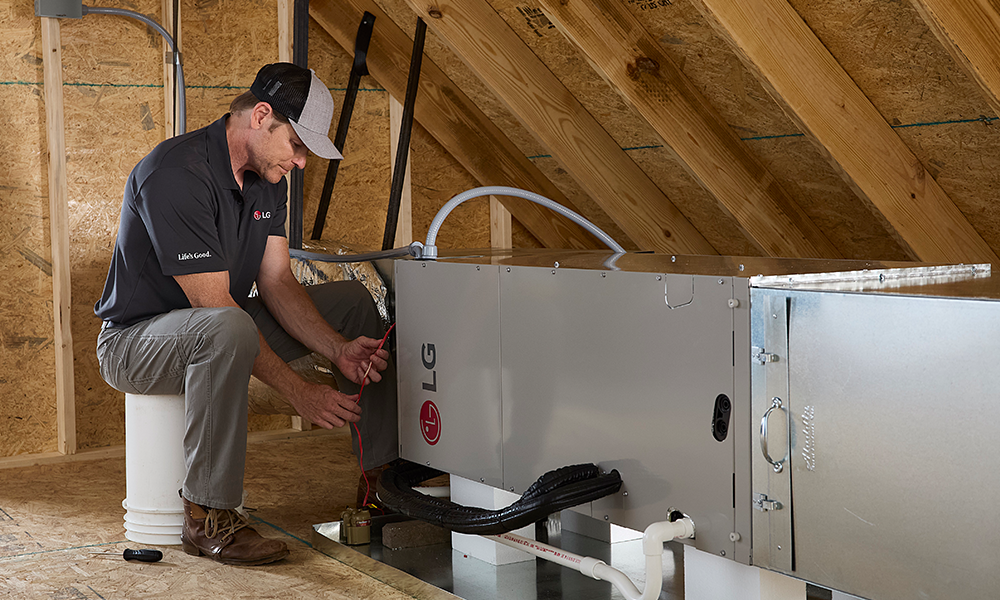
- Attic conditions affect installation. Tight access, high attic temperatures, platforms, drain routing, duct exposure, and service clearances can change labor and scope.
- Existing homes may contain mixed-era components. Renovations can leave older ducts, newer controls, altered rooms, or equipment installed at different times. Compatibility must be verified rather than assumed.
- Storms and outages shape priorities but do not justify unsupported claims. Discuss the home’s actual electrical and fuel configuration with qualified providers; this page does not promise generator compatibility or uninterrupted operation.
Sugar Land AC Pros serves residential properties in Sugar Land, Richmond, Missouri City, and Stafford. No commercial HVAC service is represented.
What affects a heating installation estimate?
A property-specific estimate may change with:
- selected furnace, heat-pump, air-handler, or dual-fuel configuration;
- required heating and cooling capacity;
- efficiency level, staging, and control features;
- whether cooling equipment is included in the project;
- compatibility and condition of retained indoor or outdoor components;
- thermostat, low-voltage wiring, and communicating-control requirements;
- accessible duct condition, transitions, plenums, filtration, and airflow corrections;
- gas piping, shutoff, venting, and combustion-air conditions relevant to a furnace scope;
- electrical circuit, disconnect, breaker, heat-strip, or service requirements relevant to the equipment;
- refrigerant-line, condensate, drain, pad, platform, and equipment-location conditions;
- attic, closet, gate, or other access limitations;
- removal and disposal tasks stated in the proposal; and
- applicable permit or inspection requirements.
Published prices would be misleading without this information, so none are stated here. Rebates, tax credits, financing, fuel savings, and utility-bill reductions are not promised. If any program or payment option is discussed during an estimate, verify its current terms and eligibility from the responsible source before making a purchase decision.
How to compare heating installation proposals
Use this checklist before selecting a proposal:
- The system type and reason for the recommendation are clear.
- The capacity choice considers the home’s load and comfort history.
- Every indoor and outdoor model or major component is identified.
- Retained equipment is listed and compatibility is explained.
- Duct, drain, venting, gas, electrical, platform, and control work is itemized.
- Removal, disposal, permits, and inspections are addressed where applicable.
- Startup and operational checks are described.
- Exclusions and conditions that could change the scope are written down.
- Equipment documentation and applicable manufacturer terms are available for review.
- No unverified incentive or operating-savings claim is carrying the decision.
For a combined cooling-and-heating project, read the AC installation guide as well. If the main question is whether an existing cooling system should be retired, see AC replacement.
Entity facts
| Fact | Detail |
|---|---|
| Business | Sugar Land AC Pros |
| Service | Residential heating installation planning and installation |
| Equipment covered | Furnaces, heat pumps, air handlers, and compatible combined-system configurations |
| Decision focus | Sizing, equipment fit, airflow, utilities, controls, safety-related conditions, access, and written scope |
| Territory | Sugar Land, Richmond, Missouri City, and Stafford, Texas |
| Phone | (346) 683-3844 |
| service@sugarlandacpros.com | |
| Business model | Service-area business; no public walk-in address is represented |
| Scheduling | Request an appointment for current scheduling information |
Frequently asked questions
Should I install a furnace or a heat pump in Sugar Land?
Either may fit. A furnace can make sense where suitable fuel service and venting already exist and furnace heat is preferred. A heat pump can provide both heating and cooling from one electric refrigeration system and often aligns with the area’s mild heating season. Compare the home’s utilities, ducts, cooling needs, cold-weather capacity, backup heat, operating assumptions, and total installation scope before deciding.
How is the right heating-system size determined?
The selection should consider the home’s heating and cooling loads, floor area, ceiling height, insulation, windows, orientation, air leakage, occupancy, duct capacity, room exposure, and comfort history. The old equipment size can provide context, but copying it without checking these factors can repeat an existing problem.
Can a new furnace or heat pump use my existing ductwork?
Sometimes. Existing ducts may remain if they are in serviceable condition, reasonably sealed and insulated, and able to carry the required supply and return airflow. Leakage, restrictions, damaged runs, inadequate returns, or unsuitable transitions may require separate corrections that should be itemized in the proposal.
What should be included in a heating installation quote?
A useful quote identifies the proposed equipment, retained components, controls, installation labor and materials, duct or transition work, drainage, electrical or gas and venting scope as applicable, removal, permits or inspections where required, startup checks, exclusions, and conditions that could change the total scope.
Do you install heating systems outside Sugar Land?
Sugar Land AC Pros provides residential heating installation within the stated territory of Sugar Land, Richmond, Missouri City, and Stafford, Texas. Contact the team with the property’s city and system details to discuss fit and current scheduling.
Request a heating installation estimate
Share the property city, current system type, fuel source if known, equipment location, comfort concerns, and whether cooling equipment is part of the project. Request an estimate, call (346) 683-3844, or email service@sugarlandacpros.com. Sugar Land AC Pros will discuss the residential scope without promising an unverified price, incentive, response time, or completion date.