Quick answer
Sugar Land AC Pros helps homeowners in Sugar Land, Richmond, Missouri City, and Stafford choose and service residential heating systems. This hub compares furnaces, heat pumps, installation, repair, and maintenance so you can start with the right path for a breakdown, comfort problem, or planned equipment decision.
Choose the right heating system or service path
A heating request often begins with one question—why is the house cold?—but the useful next step depends on the equipment and the goal. A gas furnace creates heat through combustion. An electric furnace uses resistance heat. A heat pump transfers heat and may share components with the cooling system. Each setup has different controls, operating sequences, safety considerations, and replacement tradeoffs.
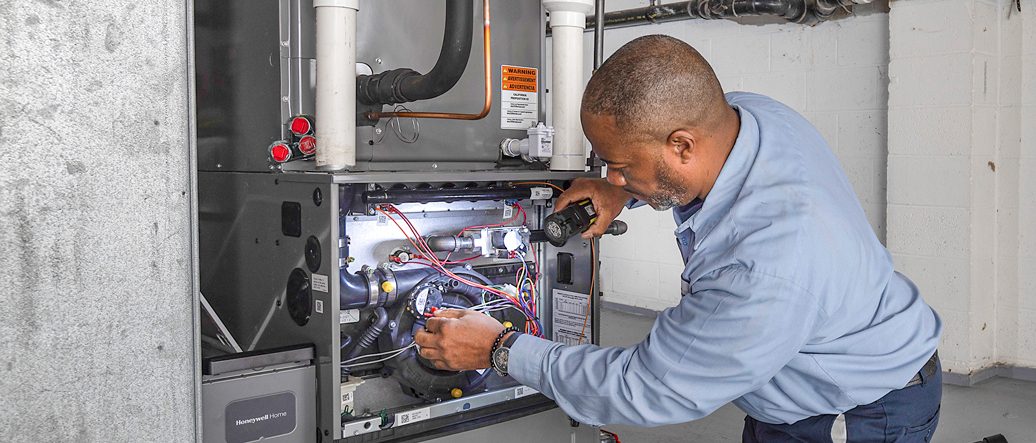
Use heating repair when a furnace, heat pump, or air handler will not start, underheats, has weak airflow, or behaves abnormally and the cause is unknown. Use furnace repair for furnace-specific ignition, burner, combustion-safety, limit-control, flame-sensing, airflow, and cycling concerns. If the system is operating and needs seasonal inspection rather than fault diagnosis, begin with heating maintenance.
Residential heating options
| Option or service | A useful starting point when… | Main decision or diagnostic focus |
|---|---|---|
| Heating repair | Any residential heating system will not start, does not warm the home, has weak airflow, or operates abnormally | Identify whether the problem is in the thermostat, controls, furnace, heat pump, air handler, airflow path, or supporting electrical system |
| Furnace repair | A gas or electric furnace has ignition, burner, safety-switch, blower, control, odor, or cycling symptoms | Furnace operating sequence, combustion-related safety for gas equipment, airflow, electrical controls, and limit operation |
| Heat pumps | You are comparing electric heating and cooling in one system or need heat-pump-specific service | Heating and cooling configuration, auxiliary heat, defrost operation, controls, equipment match, and suitability for the home |
| Heating installation | You are selecting a new furnace or heat pump | Load, fuel or electric configuration, equipment capacity, efficiency, duct and electrical conditions, controls, access, and installation scope |
| Heating maintenance | The system operates but needs a pre-season inspection | Operating sequence, accessible cleanliness, airflow, controls, electrical connections, and safety-related observations appropriate to the equipment type |
These pages cover residential heating. Commercial HVAC systems and commercial projects are outside the stated scope. Major duct reconstruction, fuel-line alteration, structural work, and electrical-service upgrades should be separately evaluated when they are relevant rather than assumed to be included with standard heating service.
Furnace or heat pump? Start with the home, not a slogan
| Decision factor | Furnace considerations | Heat-pump considerations |
|---|---|---|
| How heat is produced | A gas furnace burns fuel; an electric furnace uses resistance elements | The system transfers heat and commonly provides both heating and cooling |
| Existing home setup | Existing venting, fuel supply, electrical service, air handler or coil, and ducts affect the practical scope | Existing outdoor equipment, indoor coil or air handler, electrical capacity, ducts, thermostat, and auxiliary heat affect the practical scope |
| Cold-weather operation | Output and safety controls depend on the furnace type and condition | Capacity and efficiency change with outdoor conditions; auxiliary heat and defrost strategy matter |
| Cooling relationship | A furnace can share a blower and duct system with central AC | Heating and cooling functions are integrated, so a replacement decision may affect both seasons |
| Comfort and controls | Staging, blower operation, airflow, and thermostat compatibility influence comfort | Variable operation, defrost cycles, auxiliary heat, airflow, and control setup influence comfort |
| Installation decision | Venting, combustion air, condensate handling on applicable equipment, fuel connection, electrical needs, and code requirements must be reviewed | Equipment match, refrigerant connections, drainage, electrical needs, outdoor placement, controls, and code requirements must be reviewed |
Neither option is automatically best for every Sugar Land-area home. The responsible comparison considers the existing system, available utilities, duct capacity, electrical conditions, household comfort priorities, expected use, and the complete installed scope. The heat-pump page owns the detailed heat-pump comparison; the heating installation page covers project planning for either system type.
How the heating service process works
- Identify the equipment and goal. Share whether the home has a gas furnace, electric furnace, heat pump, or another residential configuration and whether the need is repair, maintenance, or replacement planning.
- Describe symptoms or comfort priorities. Note when the issue began, thermostat settings, affected rooms, airflow changes, noises, odors, breaker trips, or displayed fault messages.
- Inspect the relevant system. The technician evaluates accessible controls, electrical operation, airflow, equipment sequence, and system-specific components connected to the request.
- Separate the immediate need from broader options. A repair diagnosis should not automatically become a replacement proposal. A planned installation should account for the home rather than simply copy the old equipment label.
- Review a defined scope. The homeowner should understand recommended work, exclusions, assumptions, and conditions that could change the estimate before authorizing work.
- Verify operation. Completed work should end with an operating check and a practical explanation of settings or follow-up needs.
Heating in the Sugar Land area
The Sugar Land area has a shorter heating season than many colder regions, but winter cold fronts can create a sudden, meaningful load. Equipment that sat mostly idle may show control, ignition, auxiliary-heat, airflow, or electrical problems during the first sustained call for heat. A short season can also mean that a developing problem remains unnoticed until the home needs full output.
Local humidity and attic installations still matter in winter. Duct leakage, damaged insulation, restricted filters, and attic air handlers can reduce delivered heat or create room-to-room differences even when the heating equipment runs. Heat pumps also use outdoor equipment in heating mode, so outdoor airflow and defrost behavior belong in the diagnosis.
Property age does not determine the answer by itself. Established and newer homes may have equipment, controls, ducts, insulation, or electrical components from different installation periods. The recommendation should follow the actual system and home conditions.
For local coverage details, visit Sugar Land, Richmond, Missouri City, or Stafford.
Safety comes before troubleshooting
Leave the home and contact the gas utility or appropriate emergency service from a safe location if you suspect a gas leak. Do not operate switches, create a flame, or try to find the leak. If a carbon-monoxide alarm sounds, move everyone to fresh air and follow the alarm manufacturer’s and emergency authorities’ instructions.
Turn heating equipment off and seek appropriate help for smoke, fire, sparking, repeated breaker trips, a strong electrical-burning odor, or severe mechanical noise. Do not remove sealed panels, bypass safety switches, relight equipment contrary to its manufacturer instructions, handle fuel or high-voltage components, or keep resetting a system that shuts itself down.
Sugar Land AC Pros does not promise emergency or after-hours availability on this page. Call (346) 683-3844 to ask about current scheduling; use emergency authorities when there is an immediate life-safety, fire, gas, or carbon-monoxide concern.
What affects a heating estimate?
There is no responsible one-price answer for “heating service” because diagnosis, maintenance, repair, and installation are different scopes. Estimate and decision factors can include:
- system type, fuel or electrical configuration, and equipment capacity;
- the diagnostic work needed to isolate a fault;
- the failed component and any contributing airflow, control, venting, or electrical condition;
- part availability and compatibility;
- furnace, heat-pump, air-handler, coil, thermostat, and auxiliary-heat configuration;
- duct, filter, return-air, drain, venting, fuel, or electrical corrections that are actually required;
- attic, closet, platform, exterior, or other equipment access;
- installation complexity, removal scope, and applicable permit or inspection requirements; and
- whether repair, a system-specific replacement, or a combined heating-and-cooling project is being considered.
Compare proposals by included work, exclusions, equipment match, verification steps, and the conditions that could change the scope—not only by the bottom line. Prices, rebates, financing, tax incentives, guarantees, and completion times are not promised on this page.
Entity facts
| Fact | Detail |
|---|---|
| Business | Sugar Land AC Pros |
| Page topic | Residential heating system and service choices |
| Systems covered | Gas and electric furnaces, heat pumps, air handlers, thermostats, and related residential airflow and controls |
| Service paths | Heating repair, furnace repair, heat pumps, heating installation, and heating maintenance |
| Service area | Sugar Land, Richmond, Missouri City, and Stafford, Texas |
| Phone | (346) 683-3844 |
| service@sugarlandacpros.com | |
| Business model | Service-area business; no public walk-in address is represented |
| Scheduling | Call or request an estimate to discuss current scheduling |
Frequently asked questions
Which heating service should I request?
Choose heating repair when a furnace, heat pump, or air handler is not working and the cause is unknown. Choose furnace repair when the issue clearly involves furnace ignition, burners, flame sensing, combustion-safety controls, limit switches, blower operation, or furnace cycling. Maintenance is for an operating system that needs seasonal inspection, while installation is for a planned equipment change.
Is a heat pump or furnace better for a Sugar Land home?
The better choice depends on the existing equipment, utilities, electrical capacity, ducts, comfort goals, heating and cooling needs, and complete installation scope. A heat pump combines heating and cooling and may use auxiliary heat during some conditions. A furnace uses gas combustion or electric resistance heat. A home-specific comparison is more useful than a universal rule.
How often should residential heating equipment be maintained?
A practical approach is an annual heating inspection, often scheduled before the main winter use. Filter checks may be needed more often based on the filter, household conditions, pets, renovation dust, and runtime. Maintenance can identify some developing concerns, but it cannot guarantee that a future breakdown will not occur.
Why does my heater run without warming every room evenly?
Uneven heating may involve a blocked filter, blower performance, duct leakage or restriction, closed registers, return-air limitations, thermostat location, equipment output, or differences in room exposure and insulation. Because both the equipment and air-distribution system affect comfort, diagnosis should not assume the furnace or heat pump alone is at fault.
Do you provide emergency heating service?
Emergency or after-hours availability is not promised on this page. Call (346) 683-3844 to ask about current scheduling. For a suspected gas leak, carbon-monoxide alarm, fire, smoke, or immediate electrical hazard, leave the unsafe area and contact the gas utility or appropriate emergency service rather than waiting for a routine HVAC appointment.
Request heating help
Not sure whether you need repair, maintenance, or a system comparison? Request an estimate and describe the equipment, symptom or goal, property city, and any safety-related condition. You can also call (346) 683-3844 or email service@sugarlandacpros.com. Sugar Land AC Pros will discuss the appropriate residential service path and current scheduling without making an unsupported availability or response-time promise.
You can also review all residential HVAC services or return to the home page.