Quick answer
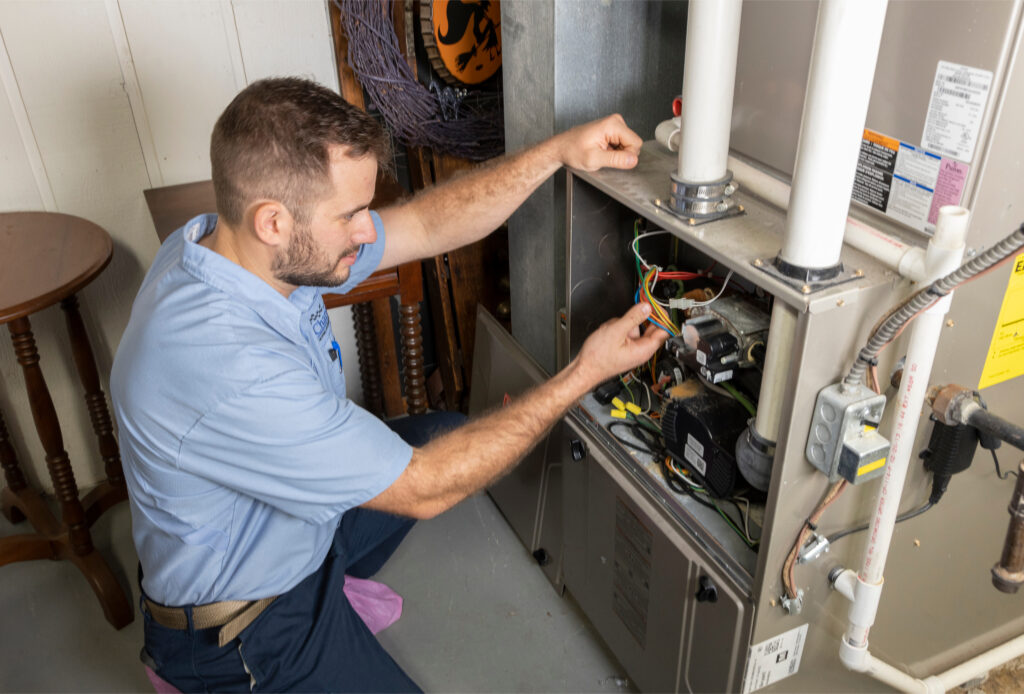
Sugar Land AC Pros diagnoses residential furnaces, heat pumps, and air handlers that will not start, do not produce enough heat, have weak airflow, trip breakers, or operate abnormally. Heating repair is available by appointment in Sugar Land, Richmond, Missouri City, and Stafford, with system-wide diagnosis used to separate thermostat, electrical, airflow, furnace, heat-pump, auxiliary-heat, and air-handler faults.
Heating problems across multiple system types
The same symptom can come from different equipment. “The heater runs but the house stays cold” may mean a gas furnace is not completing ignition, an electric furnace has a control or element problem, a heat pump is not transferring heat normally, auxiliary heat is not responding, or the blower and ducts are not delivering enough air. The repair path begins by identifying the system and following its operating sequence.
| What you notice | Conditions that may need to be checked | Safe homeowner action |
|---|---|---|
| Nothing starts when heat is requested | Thermostat mode or power, breaker, service switch, low-voltage controls, safety switch, furnace controls, heat-pump controls, or air-handler power | Confirm ordinary thermostat settings and check the breaker once; do not repeatedly reset a breaker |
| Equipment runs but the home underheats | Equipment output, auxiliary heat, outdoor-unit operation, defrost behavior, filter restriction, blower operation, duct loss, thermostat location, or home load | Check the setpoint and homeowner-serviceable filter; note which rooms remain cold |
| Airflow is weak | Filter, blower motor or control, indoor coil or heat exchanger airflow path, return-air restriction, dampers, registers, or ducts | Replace only a safely accessible homeowner-serviceable filter if needed; do not open equipment panels |
| Air from a heat pump feels mildly warm | Normal lower-temperature heat-pump operation, low output, auxiliary-heat issue, defrost cycle, airflow, or control problem | Compare room temperature with the thermostat trend rather than judging by hand alone; request service if the home loses temperature |
| Outdoor unit frosts in heating mode | Normal temporary frost, defrost-cycle operation, outdoor airflow restriction, sensor or control fault, fan problem, or refrigerant-circuit condition | Keep the outdoor unit clear of loose debris without opening it; schedule diagnosis for heavy ice or failed defrost |
| Breaker trips or an electrical odor appears | Motor, heat strip, wiring, relay, contactor, control, or another electrical fault | Turn the system off; do not keep resetting the breaker or touch wiring |
| Heating starts and stops too often | Thermostat or control issue, airflow restriction, limit operation, equipment output, heat-pump controls, or capacity mismatch | Record the cycle pattern and any fault display; avoid repeated setting changes |
| New noise develops | Blower, motor, fan, bearing, loose component, debris, duct movement, compressor, or another mechanical condition | Turn the system off for severe grinding, banging, smoke, or an electrical-burning odor |
This table provides diagnostic possibilities, not a remote diagnosis. Gas-furnace ignition, burners, combustion-safety controls, flame sensing, limit switches, and furnace-specific cycling are covered in depth on the furnace repair page.
What residential heating repair covers
Depending on the equipment and complaint, diagnosis may include:
- thermostat setup, power, wiring, calls for heat, and equipment response;
- accessible low-voltage and line-voltage controls connected to the symptom;
- furnace, heat-pump, air-handler, blower, and auxiliary-heat operating sequence as applicable;
- breakers, disconnects, service switches, relays, contactors, motors, capacitors, heat strips, sensors, and controls relevant to the system;
- filter condition, return and supply airflow, registers, accessible duct connections, and indoor equipment restrictions;
- outdoor-unit fan, coil condition, frost pattern, and defrost-related operation on heat pumps;
- temperature response, system cycling, and room-to-room comfort observations; and
- signs that a separate furnace-specific, refrigerant-circuit, duct, electrical, venting, or installation scope is needed.
The page covers residential systems only. Commercial-only equipment and commercial HVAC projects are excluded. Major duct reconstruction, fuel-line work, vent-system alteration, electrical-service upgrades, and full equipment installation are not assumed to be part of a standard repair; when indicated, they should be separately defined.
Safe checks before requesting service
- Confirm the thermostat is set to heat, the setpoint is above room temperature, and an unintended schedule or hold is not active.
- If the thermostat screen is blank, replace homeowner-serviceable batteries when applicable. Do not open equipment wiring compartments.
- Check the homeowner-serviceable filter. Replace it if visibly blocked and if replacement can be performed without opening the equipment cabinet.
- Make sure supply registers and return grilles are not covered by furniture or rugs.
- Check the normal home breaker once. If it trips again, leave it off and request service.
- For a heat pump, note whether the outdoor unit runs, whether heavy ice remains, whether the thermostat displays auxiliary or emergency heat, and whether the indoor temperature is falling.
- Write down fault codes shown on a thermostat or visible through a designated viewing window, but do not remove panels to find a code.
These checks can rule out ordinary settings and access issues. They do not replace diagnosis, and homeowners should not bypass switches, test high-voltage components, handle refrigerant, relight equipment outside manufacturer instructions, or force a repeatedly shutting-down system to run.
When to stop the system and leave troubleshooting to professionals
Leave the home and contact the gas utility or appropriate emergency service from a safe location if you suspect a gas leak. If a carbon-monoxide alarm sounds, move everyone to fresh air and follow emergency guidance. Do not use electrical switches, create a flame, or remain inside to search for a suspected leak.
Turn the heating system off for smoke, fire, sparking, repeated breaker trips, a strong electrical-burning odor, severe mechanical noise, or water reaching electrical components. Use the appropriate emergency service for an immediate fire, gas, carbon-monoxide, or electrical danger.
Emergency or after-hours HVAC availability is not promised. Call (346) 683-3844 to ask about current scheduling after immediate hazards have been handled appropriately.
How heating repair works
- Describe the system and failure. Share the equipment type if known, when the problem started, thermostat behavior, affected rooms, and any noise, odor, breaker, frost, or fault-code clues.
- Reproduce the call for heat. When safe and practical, the technician observes how the thermostat, indoor equipment, outdoor equipment, blower, and auxiliary heat respond.
- Test the relevant sequence. Diagnosis follows the system rather than replacing a part from the symptom alone.
- Identify the failure and contributing conditions. A failed control can coexist with restricted airflow; a heat-pump issue can coexist with an auxiliary-heat problem. Both should be distinguished when supported by findings.
- Review the proposed scope. The homeowner receives an explanation of the recommended repair, exclusions, and any condition that could change the plan.
- Complete authorized residential work. Work proceeds within the agreed scope.
- Verify operation. The repaired function is tested, and remaining limitations or separate recommendations are explained.
Local winter conditions
Heating systems around Sugar Land can sit lightly used for long periods and then face a sharp increase in demand during a cold front. First-use failures may reveal a weak control, ignition issue, blower problem, heat-pump defrost fault, auxiliary-heat problem, or restricted filter that was not obvious during mild weather.
Heat pumps deserve system-specific attention because the outdoor unit runs in heating mode and periodically manages frost. A brief defrost cycle and temporary change in delivered-air temperature can be normal; a heavily iced outdoor coil, falling indoor temperature, or auxiliary heat that never responds may indicate a fault. Furnaces have a different sequence and different safety considerations, which is why furnace-specific symptoms belong on the furnace repair page.
Attic equipment and ducts can influence any heating type. Access, damaged duct insulation, leakage, return restrictions, and room exposure may affect delivered comfort. Sugar Land AC Pros serves residences in Sugar Land, Richmond, Missouri City, and Stafford.
What affects heating repair cost?
A symptom does not establish a responsible repair price. “No heat” can range from a setting or control issue to a failed motor, heat strip, furnace component, heat-pump control, outdoor-unit fault, or broader electrical or airflow problem. Estimate factors include:
- diagnostic time needed to identify the system and isolate the cause;
- furnace, heat-pump, air-handler, auxiliary-heat, and thermostat configuration;
- the failed component and any contributing airflow, electrical, control, or equipment condition;
- part availability and compatibility;
- access to indoor, attic, closet, platform, and outdoor equipment;
- whether frost, a lockout, or intermittent behavior limits immediate testing;
- whether a furnace-specific combustion or venting concern requires a separate scope;
- whether refrigerant-circuit, duct, or electrical corrections are needed; and
- whether the homeowner requests a repair-versus-replacement comparison.
Ask what diagnosis is included, which parts and labor are included, what is excluded, how operation will be verified, and what finding could change the estimate. No flat price, financing, rebate, guarantee, emergency availability, response time, or repair duration is promised on this page.
Repair or replacement?
Repair can be reasonable when the fault is identifiable, the remaining equipment is in serviceable condition, the system met comfort needs before the failure, and compatible parts are available. Replacement deserves comparison when failures repeat, a major component is involved, multiple sections are deteriorated, equipment compatibility is limited, or the system no longer meets the home’s comfort and operating goals.
The system type matters. A heat-pump decision can affect both heating and cooling. A furnace decision can affect the shared blower, coil, controls, fuel or electrical configuration, and venting. Review heating installation for planned replacement scope, or visit heat pumps for a heat-pump-specific comparison. Diagnosis should precede a replacement recommendation when the immediate cause is unknown.
Entity facts
| Fact | Detail |
|---|---|
| Business | Sugar Land AC Pros |
| Page service | Residential heating diagnosis and repair across multiple system types |
| Systems covered | Gas and electric furnaces, heat pumps, air handlers, auxiliary heat, thermostats, airflow, and related controls |
| Intent boundary | Broad no-heat and underheating diagnosis; furnace-specific ignition, combustion-safety, burner, flame-sensing, limit, and cycling work is detailed on the furnace repair page |
| Service area | Sugar Land, Richmond, Missouri City, and Stafford, Texas |
| Phone | (346) 683-3844 |
| service@sugarlandacpros.com | |
| Business model | Service-area business; no public walk-in address is represented |
| Scheduling | Call or request service to discuss current scheduling |
Frequently asked questions
What should I check when my heater is not working?
Confirm the thermostat is set to heat, raise the setpoint above room temperature, check homeowner-serviceable thermostat batteries and the filter, make sure registers and returns are unobstructed, and check the normal home breaker once. If a breaker trips again, leave it off. Do not open equipment panels, bypass safety switches, handle wiring or refrigerant, or repeatedly reset a system that shuts down.
Do you repair furnaces, heat pumps, and air handlers?
Yes. This page covers residential diagnosis across gas and electric furnaces, heat pumps, air handlers, auxiliary heat, thermostats, airflow, and related controls. Furnace-specific ignition, burner, combustion-safety, flame-sensing, limit-control, and cycling issues are addressed in more detail on the furnace repair page.
Is emergency heating repair available?
Emergency or after-hours availability is not promised on this page. Call (346) 683-3844 to ask about current scheduling. If you suspect a gas leak, a carbon-monoxide alarm sounds, or there is fire, smoke, sparking, or an immediate electrical hazard, leave the unsafe area and contact the gas utility or appropriate emergency service first.
Why is my heat pump blowing air that does not feel hot?
Heat-pump supply air can feel less hot than furnace air while still warming the home. Concern is warranted when the indoor temperature falls, the system runs without recovering, heavy outdoor ice remains, auxiliary heat does not respond, or a fault appears. Those symptoms can involve controls, airflow, defrost, auxiliary heat, outdoor equipment, or the refrigerant circuit and merit diagnosis.
Should I repair or replace a heating system?
Repair may make sense when the failure is isolated, compatible parts are available, and the rest of the system remains serviceable. Replacement deserves comparison when major or repeated failures combine with broad equipment deterioration, persistent comfort problems, limited compatibility, or a system that no longer fits the home’s needs. Use an on-site diagnosis and complete-scope estimate rather than one age or cost rule.
Can heating maintenance fix a system that already has no heat?
A no-heat or underheating complaint should be scheduled as repair diagnosis, not routine maintenance. Maintenance is intended for an operating system that needs seasonal inspection and cleaning. If the equipment currently operates normally and no fault is present, review heating maintenance.
Request heating repair
Use the estimate and service request form to describe the system, symptom, city, thermostat behavior, and any breaker, frost, noise, odor, or fault-code condition. You can also call (346) 683-3844 or email service@sugarlandacpros.com. Sugar Land AC Pros will discuss the appropriate residential service path and current scheduling without an unsupported response-time promise.
Return to the heating services hub to compare repair, maintenance, heat-pump, and installation options.