Quick answer
Sugar Land AC Pros installs, repairs, and replaces residential heat pumps in Sugar Land, Richmond, Missouri City, and Stafford. Heat pumps can be a practical Texas choice because one electric system provides cooling and heating, but suitability depends on cooling and heating loads, low-temperature capacity, auxiliary heat, electrical service, ducts, controls, and the household’s energy-cost assumptions.
Are heat pumps a good fit for the Sugar Land climate?
Often, yes—but not automatically. A heat pump moves heat rather than creating all heat through electric resistance. In cooling mode it works much like a central air conditioner; in heating mode it reverses the refrigeration cycle and draws heat from outdoor air. The Sugar Land area’s long cooling season and generally mild winter conditions can make that two-in-one design appealing.
The honest qualification is that winter averages do not describe every hour. During a cold snap, a heat pump’s available capacity and efficiency can change as outdoor temperature falls. Defrost cycles are normal, and properly configured auxiliary heat may be needed. The home must also have adequate electrical capacity, airflow, and controls for the selected equipment.
A heat pump is not guaranteed to cost less to operate than a furnace. Utility rates, fuel prices, equipment performance at actual temperatures, thermostat settings, auxiliary-heat use, duct losses, installation quality, and household habits all affect the result. Compare the specific options and assumptions instead of relying on a national rule of thumb.
Heat pump versus furnace in Southeast Texas
| Decision factor | Heat pump | Gas furnace with central AC |
|---|---|---|
| Heating method | Transfers heat through a refrigeration cycle; auxiliary electric heat may supplement it | Produces heat through fuel combustion and moves it through ducts |
| Cooling | Same outdoor system provides air conditioning | Separate AC outdoor unit works with the furnace blower and indoor coil |
| Local climate fit | Mild winter conditions can favor heat-pump operation, provided cold-weather capacity is planned | Strong heating output can suit owners who prefer furnace heat or have an established gas configuration |
| Utility requirements | Requires suitable electrical capacity for equipment and any auxiliary heat | Requires suitable fuel service, venting, combustion air, electrical controls, and a separate cooling circuit |
| Cold snaps | Capacity, defrost, controls, and auxiliary heat must be evaluated | Furnace operation is less dependent on outdoor heat availability, but fuel and combustion safety remain important |
| Indoor feel | Supply air during normal heat-pump operation may feel less hot than furnace air while still heating the home | Typically delivers warmer supply air during a heating call |
| Installation decision | Evaluate heating and cooling loads, ducts, electrical scope, and low-temperature performance | Evaluate heating load, cooling match, blower airflow, gas and venting scope, and combustion-related conditions |
| Operating-cost comparison | Depends on electric rate, performance, auxiliary use, weather, and runtime | Depends on fuel price, furnace efficiency, electrical blower use, weather, and runtime |
A dual-fuel system is another option: the heat pump operates under selected conditions and a furnace becomes the alternate heat source according to the controls. It may suit some homes, but the additional equipment, controls, installation scope, and service complexity should be justified—not added by default.
Heat pump services
Heat pump installation
A new heat pump should be selected as a complete heating-and-cooling system. Installation planning includes capacity, indoor and outdoor equipment compatibility, blower and duct airflow, refrigerant circuit, condensate drainage, electrical requirements, thermostat controls, auxiliary heat, defrost operation, equipment access, and startup checks.
If the project is a broader furnace-versus-heat-pump decision, use the heating installation guide for equipment-selection questions. The AC installation guide explains cooling-load, humidity, and combined-system considerations in more detail.
Heat pump repair
Repair begins with symptoms and diagnosis. Common complaints include:
- the system runs but does not heat or cool adequately;
- the outdoor unit does not start;
- the system stays in auxiliary or emergency heat unexpectedly;
- the outdoor coil repeatedly ices beyond normal defrost behavior;
- the thermostat does not switch modes correctly;
- airflow is weak or some rooms remain uncomfortable;
- the system cycles unusually, trips a breaker, makes a new noise, or produces an unfamiliar odor; or
- the indoor equipment or drain area shows water.
Similar symptoms can have different causes. Controls, sensors, airflow, electrical components, refrigerant conditions, defrost operation, the reversing valve, blower performance, and auxiliary heat can all affect operation. Do not open electrical panels, bypass safeties, or attempt refrigerant work. If there is smoke, sparking, a burning odor, or repeated breaker tripping, turn the equipment off if it is safe to do so and seek appropriate help; no emergency response promise is made here.
For diagnosis across all residential heating types, see heating repair.
Heat pump replacement
Replacement may be worth comparing when a major failure occurs alongside repeated repairs, component deterioration, poor comfort, outdated controls, compatibility limits, or equipment that no longer fits the home’s load. Age alone does not decide the issue, and a repairable fault does not automatically justify replacing the system.
A replacement evaluation should address both seasons. The new equipment must cool and dehumidify appropriately in summer, heat under expected winter conditions, coordinate auxiliary heat and defrost, and work with the home’s ducts and electrical service. The written proposal should identify retained components and explain compatibility.
Repair or replacement?
| Condition | Repair may be a sensible first option | Replacement may deserve comparison |
|---|---|---|
| Fault | One identifiable component failed and the remaining system appears serviceable | A major component failed or diagnosis identifies multiple deteriorating areas |
| History | The system has otherwise operated dependably | Repeat failures, refrigerant problems, or mode-switching issues continue |
| Comfort | Heating, cooling, and humidity performance were acceptable before the fault | Uneven comfort, poor moisture control, excessive auxiliary-heat use, or long runtimes persist |
| Compatibility | Appropriate parts are available and existing components still form a suitable system | Component matching, controls, refrigerant, or parts availability limits a responsible repair |
| Home fit | Capacity and ducts still suit the property | Renovations, additions, duct changes, or prior sizing issues mean the system no longer fits |
| Ownership goal | The priority is restoring operation with a contained scope | The priority is reducing repeat-repair exposure or changing efficiency, sound, controls, or system type |
Ask for the diagnosed fault, condition of the complete system, repair scope, replacement assumptions, and the risks that remain under each option. Neither the lowest repair figure nor the newest equipment label answers those questions by itself.
Heat pump installation and replacement process
- Define the goal. Discuss repair history, heating and cooling complaints, electrical or fuel preferences, thermostat habits, and whether the project changes system type.
- Assess the home and existing system. Review load factors, equipment locations, ducts, airflow, drainage, refrigerant-line conditions, electrical needs, controls, and access.
- Select an appropriate configuration. Compare capacity, efficiency, operating stages, low-temperature performance, auxiliary heat, sound, controls, and serviceability.
- Write the scope. Identify indoor and outdoor models, retained components, included modifications, removal, exclusions, permits or inspections where applicable, and conditions that may change the work.
- Install the agreed system. Set and connect the specified equipment, refrigerant circuit, drainage, electrical components, controls, and duct transitions within scope.
- Commission operation. Verify heating and cooling calls, thermostat modes, defrost and auxiliary-heat functions as conditions allow, airflow-related performance, drainage, and operating sequence.
- Review use and care. Explain normal mode behavior, filter requirements, thermostat settings, documentation, and maintenance needs.
The expected timeline depends on the project configuration, access, equipment, electrical or duct changes, inspection requirements, weather, and discovered conditions. Request a project-specific schedule rather than relying on a generic promise.
Local heat pump factors
The area’s hot, humid conditions mean a heat pump is first and foremost part of the home’s cooling and moisture-control system for much of the year. Capacity should not be increased solely to address a rare cold period if that choice would undermine normal cooling cycles and humidity performance. Instead, evaluate the complete load and the system’s staged or auxiliary-heating strategy.
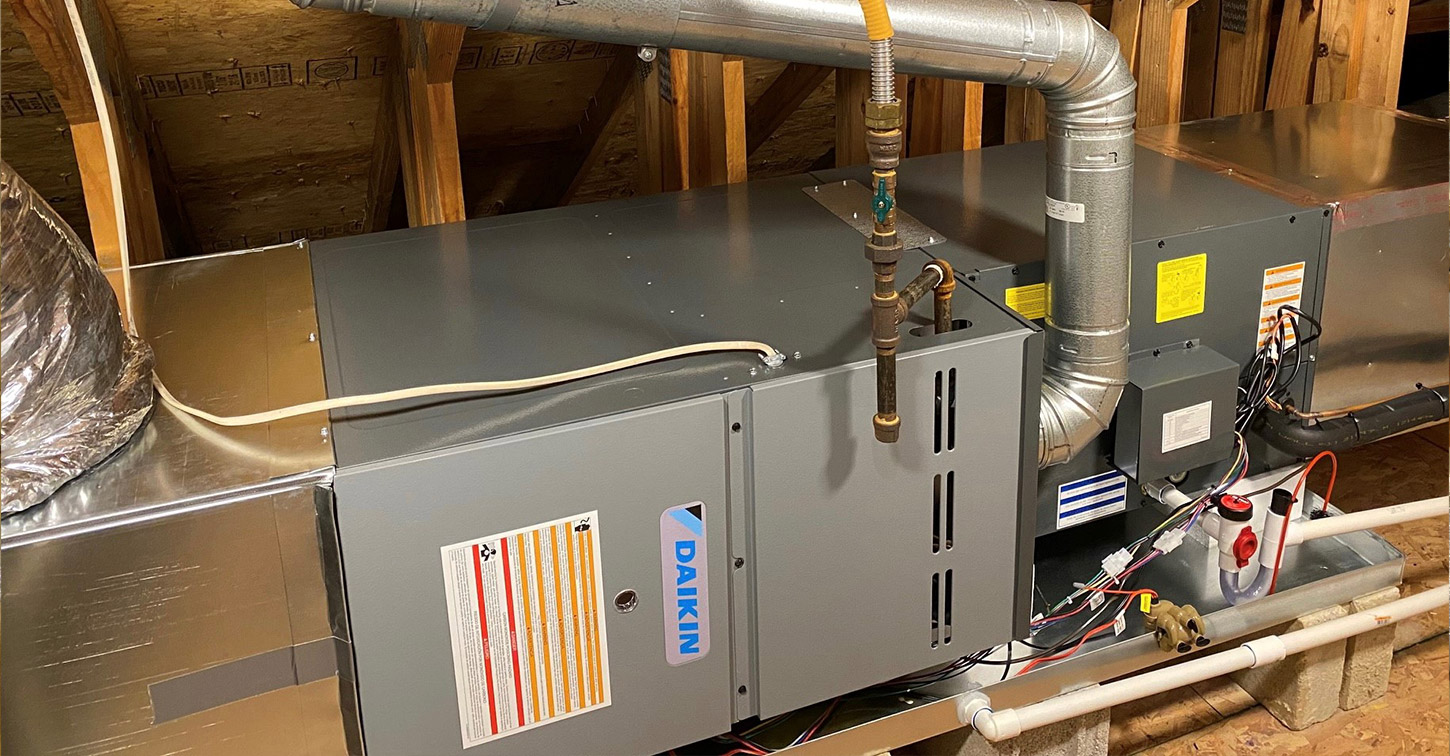
Attic air handlers and ducts require special attention because heat, tight access, insulation condition, leakage, drain routing, and platform limitations can affect both installation and delivered performance. Homes with additions, enclosed patios, high ceilings, large west-facing windows, or remodeled layouts may have load and airflow needs that the old equipment never addressed.
Before requesting service, note whether the issue occurs in heating, cooling, or both; whether the thermostat displays auxiliary or emergency heat; current filter condition; breaker behavior; outdoor frost or ice; and recent changes to controls or electrical service. These observations help frame the visit but do not replace diagnosis.
Residential heat pump service is available in Sugar Land, Richmond, Missouri City, and Stafford. Commercial HVAC service is not represented.
What affects a heat pump estimate?
Repair and installation estimates depend on different evidence.
| Estimate type | Variables that can change scope |
|---|---|
| Repair | Diagnostic findings, failed component, access, controls, electrical condition, refrigerant-circuit findings, defrost or reversing operation, airflow, auxiliary heat, parts compatibility, and follow-up testing |
| Installation or replacement | Heating and cooling capacity, equipment combination, efficiency and staging, low-temperature performance, auxiliary-heat size, thermostat, electrical circuit and service needs, ducts and transitions, refrigerant lines, drains, pad or platform, access, removal, and applicable permits or inspections |
| System conversion | All replacement factors plus changes between furnace, straight-cool, heat-pump, air-handler, or dual-fuel configurations; fuel and venting decommissioning or addition when applicable; and expanded control or electrical work |
No prices are published because a quote without equipment and property details could conceal important differences. This page does not promise rebates, tax credits, financing, energy savings, payback periods, or a fixed response time. Verify any current program or payment claim directly before relying on it.
Buyer checklist for a heat pump proposal
- Heating and cooling capacity are explained from property conditions.
- Indoor and outdoor equipment are identified as a compatible combination.
- Performance during lower outdoor temperatures is discussed without vague assurances.
- Auxiliary heat type, size, staging, and electrical needs are stated.
- Thermostat, defrost, and mode-control requirements are included.
- Duct airflow, return capacity, leakage, and transitions are considered.
- Drainage, refrigerant lines, electrical work, access, removal, and inspections are itemized.
- Retained components and exclusions are explicit.
- Startup checks cover heating, cooling, controls, airflow-related performance, and drainage.
- Operating-cost comparisons disclose their utility-rate and weather assumptions.
Entity facts
| Fact | Detail |
|---|---|
| Business | Sugar Land AC Pros |
| Service | Residential heat pump installation, repair, and replacement |
| Decision focus | Texas climate fit, heating and cooling capacity, auxiliary heat, defrost, airflow, electrical needs, controls, and written scope |
| Territory | Sugar Land, Richmond, Missouri City, and Stafford, Texas |
| Phone | (346) 683-3844 |
| service@sugarlandacpros.com | |
| Business model | Service-area business; no public walk-in address is represented |
| Scheduling | Contact the team for current appointment information |
Frequently asked questions
Is a heat pump better than a furnace in Texas?
Neither is universally better. A heat pump can suit Southeast Texas because it provides efficient heat transfer during many mild winter hours and also serves as the home’s air conditioner. A furnace may fit a home with suitable gas service and an owner who prefers furnace heat. Compare utilities, equipment scope, cold-weather capacity, cooling and humidity needs, ducts, controls, and operating-cost assumptions.
Do heat pumps work during Houston-area cold snaps?
They can, but performance depends on the specific equipment and outdoor temperature. Available heat-pump capacity may decline as temperatures fall, defrost cycles are normal, and configured auxiliary heat may operate. Equipment selection should use documented low-temperature performance and the home’s load rather than assuming mild averages cover every condition.
Why is my heat pump using auxiliary heat?
Auxiliary heat may run when the thermostat calls for rapid recovery, outdoor conditions exceed the heat pump’s available capacity, the system is defrosting, or a control or equipment problem exists. Brief operation can be normal; frequent or unexplained use deserves review of thermostat settings, sensors, airflow, defrost, equipment operation, and system sizing.
How do I decide whether to repair or replace a heat pump?
Consider the diagnosed fault, repair history, condition of the indoor and outdoor equipment, parts and controls compatibility, refrigerant-circuit condition, heating and cooling performance, auxiliary-heat use, and whether the system still fits the home. A contained fault on an otherwise sound system may favor repair; a major failure plus broader deterioration may justify comparing replacement.
What affects heat pump operating cost?
Electric rate, outdoor temperature, equipment efficiency and capacity, thermostat setting, runtime, auxiliary-heat use, defrost cycles, duct leakage, airflow, installation quality, home envelope, and occupancy all matter. A rating or broad regional claim cannot predict a particular home’s bill.
Request heat pump service or an estimate
Tell Sugar Land AC Pros whether the need is repair, replacement, or a first-time heat pump installation; include the property city, observed symptoms, current system type, and equipment location. Request an estimate, call (346) 683-3844, or email service@sugarlandacpros.com. The team will discuss the residential scope without claiming unverified availability, savings, incentives, or pricing.