Quick answer
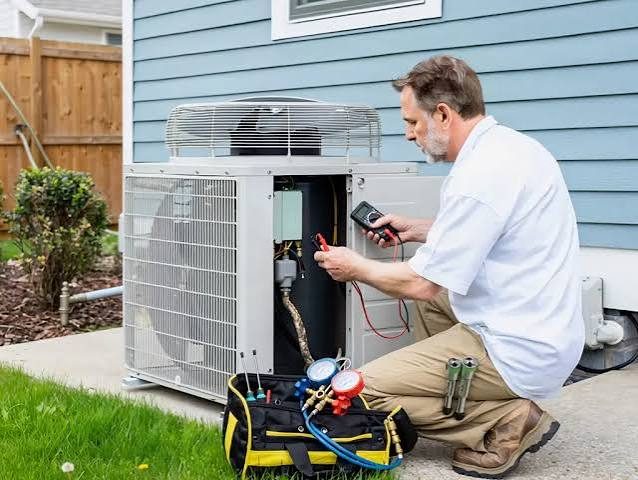
Sugar Land AC Pros serves Missouri City homeowners who need AC repair, cooling-system planning, heating or heat-pump help, and solutions for airflow, humidity, and HVAC-related air quality. Missouri City contains established communities such as Quail Valley as well as newer and differently planned residential areas, so the right diagnosis depends on the home’s layout, equipment history, duct system, controls, and actual symptom—not a citywide assumption.
At a glance
| Service fact | Details |
|---|---|
| Provider | Sugar Land AC Pros |
| Location focus | Residential properties in Missouri City, Texas |
| Core capabilities | AC diagnosis, repair, maintenance, installation and replacement planning; heating and heat pumps; HVAC-related air quality |
| Nearby coverage | Sugar Land, Stafford, and Richmond |
| Phone | (346) 683-3844 |
| service@sugarlandacpros.com | |
| Appointment policy | Contact the team to confirm address coverage, project fit, and current scheduling |
| Public location | No walk-in storefront or street address is stated; service takes place at the customer’s home |
| Exclusion | Commercial HVAC is not offered on this website |
One city, different residential comfort patterns
Missouri City cannot be reduced to one “typical” house. The City’s official community resources reflect a broad, established municipality, while Quail Valley North Park provides a specific public reference within the Quail Valley area. Quail Valley, Lake Olympia, and Sienna-area homes can differ in floor plan, landscaping, renovations, attic geometry, number of systems, and controls. Even adjacent houses may have different replacement histories.
This mixed property context changes the questions worth asking:
- Has an established home been remodeled, enclosed, or fitted with equipment in separate phases?
- Does a multi-story or larger floor plan use zoning, multiple thermostats, or more than one system?
- Were return paths and duct capacity reconsidered after an addition?
- Does dense shade or mature landscaping obstruct outdoor-unit airflow or make service access difficult?
- Are complaints isolated to a room, a floor, or one side of the house?
- Is the house uncomfortable because of temperature, humidity, airflow, particles, odor, or some combination?
Neighborhood identity helps locate the property; it does not diagnose the equipment. Sugar Land AC Pros uses the address, home conditions, and measured system behavior to develop a scope.
What hot, humid weather can reveal
The National Weather Service’s Houston-area climate normals provide an official regional reference for the Gulf Coast heat and humidity that Missouri City homes experience. During long cooling cycles, weaknesses that were less visible in mild weather can become more obvious: restricted airflow, dirty heat-transfer surfaces, duct leakage, condensate problems, electrical components under load, or equipment that no longer delivers expected performance.
Humidity deserves separate attention. A thermostat can show a reasonable temperature while occupants still feel clammy. Potential contributors include air infiltration, short cycling, airflow settings, controls, duct leakage, equipment performance, and moisture sources within the home. Increasing equipment size without a load and runtime discussion can make moisture control worse rather than better.
Climate is context, not a remote diagnosis. The useful next step is to identify which part of the cooling and moisture-management process is failing at the property.
Start an AC repair with symptoms, not guesses
AC repair may be appropriate when a Missouri City system:
- does not respond to the thermostat;
- runs but supplies warm or only slightly cool air;
- trips a breaker or stops unexpectedly;
- develops ice on an accessible line or coil area;
- leaves water near indoor equipment or a drain outlet;
- cycles more frequently than normal;
- creates a new mechanical or electrical sound;
- cools one zone while another remains uncomfortable;
- runs for long periods without controlling temperature or moisture.
A technician may need to evaluate thermostat inputs, accessible electrical components, indoor airflow, blower operation, filter condition, drainage, indoor and outdoor equipment, temperature response, and refrigerant-side performance. Which checks matter most depends on the complaint.
Do not bypass a safety switch, repeatedly reset a breaker, open an electrical compartment, or add refrigerant. If there is smoke, fire, a suspected fuel leak, or a carbon-monoxide alarm, turn to emergency services or the proper utility instead of waiting for a normal service request.
Match the diagnostic path to the property
Missouri City’s varied homes call for more than one diagnostic script.
Established or altered homes
In an established Quail Valley-area house or another remodeled property, equipment and ducts may not all be original to one design. Replaced windows, added insulation, converted spaces, relocated walls, ceiling work, or prior HVAC changes can alter load and air distribution. Evaluation may need to trace accessible duct transitions, return paths, filter placement, drain routing, and compatibility between retained and replaced components.
The home’s age alone does not prove that replacement is required. It does mean that prior alterations and current condition deserve attention.
Larger, multi-system, or zoned layouts
A Sienna-area or Lake Olympia property may have multiple levels, separate systems, zoning controls, large glass exposure, or rooms with different use patterns. If only one section is uncomfortable, the first question is whether that zone receives and returns the intended airflow. Damper operation, thermostat location, control setup, duct leakage, and room load may be more relevant than total equipment size.
One system working does not establish that the other system is healthy. Likewise, replacing one component without checking matched performance and control relationships can leave the original complaint unresolved.
Homes near mature landscapes or community water features
Trees and landscaping can affect shade, debris accumulation, and outdoor-unit access. Nearby ponds or community water features do not prove an indoor humidity problem; moisture control still depends on the building envelope, HVAC operation, occupant activities, and verified indoor conditions. Outdoor context informs inspection but should not become a sales shortcut.
Cooling options beyond the immediate repair
Maintenance
Residential AC maintenance provides a defined opportunity to review operation, filtration, drainage, accessible electrical conditions, indoor and outdoor equipment, and other checklist items appropriate to the system. It may identify developing concerns, but no tune-up can guarantee that a component will never fail.
Replacement planning
The AC replacement guide is useful when the current failure is major, repeat repairs are accumulating, compatibility limits a responsible repair, or long-standing comfort problems call the old system design into question. Replacement should not be recommended from the subdivision or installation date alone.
New installation
AC installation planning should address cooling load, equipment matching, airflow, return capacity, drainage, electrical scope, controls, access, and startup. Copying the existing capacity without considering renovations or observed comfort can reproduce an old mistake. Oversized equipment may short cycle and remove less moisture; undersized or poorly delivered capacity may struggle during demanding weather.
Ductless options
A ductless mini-split may fit a room addition, converted space, or area that cannot be served responsibly by the existing ducts. It is not automatically the best solution for every hot room. Load, condensate routing, electrical needs, placement, aesthetics, and maintenance all belong in the comparison.
Heating and heat-pump service
Missouri City homes still rely on heating during winter temperature drops. Sugar Land AC Pros provides residential heating repair for furnaces, heat pumps, air handlers, thermostats, and associated controls. Homeowners can also review furnace-specific diagnostics and heat-pump installation and service.
Heating symptoms require equipment-specific reasoning. A furnace may have ignition, flame-sensing, airflow, limit, thermostat, or control trouble. A heat pump may involve the outdoor unit, reversing operation, defrost, auxiliary heat, indoor airflow, or controls. The fact that the cooling mode operated in summer does not guarantee correct heating operation months later.
A mild odor at first seasonal startup should not be used online to dismiss a specific situation. Persistent burning, electrical or fuel odors, smoke, or a carbon-monoxide alarm requires a safety-first response.
Airflow, filtration, humidity, and indoor air quality
An indoor-comfort plan can involve more than the central equipment:
- air duct services when accessible evidence points to leakage, damage, restrictions, or a credible contamination concern;
- an indoor air quality assessment to separate particles, odors, moisture, ventilation, and HVAC factors;
- whole-home air purifier options when centralized treatment is compatible and fits the household objective;
- whole-home dehumidification when measured or persistent moisture remains after cooling and envelope factors are considered;
- filter and return review when poor fit or excessive resistance may affect airflow.
A higher-efficiency filter is not automatically better if the system cannot accommodate its resistance. Duct cleaning is not routine treatment for every dusty house, and purification does not replace source removal or moisture control. The recommendation should name the verified problem it is intended to address.
A practical repair-or-replace comparison
| What the evaluation shows | A focused repair may fit | Compare a broader replacement scope |
|---|---|---|
| Current fault | One limited failure with a clear correction | Major mechanical failure or several worn components |
| Service pattern | Few prior problems and acceptable operation | Repeat failures or recurring drain, electrical, or refrigerant concerns |
| Room comfort | Home was even and comfortable before the fault | Zones or rooms have remained uncomfortable despite basic corrections |
| Moisture control | Humidity was acceptable during normal operation | Short cycling or inadequate moisture control is persistent |
| Home changes | Current system still serves the present layout | Additions, remodels, or zoning changes challenge the original design |
| Component fit | Matching parts and a responsible repair are available | Compatibility or parts constraints limit repair value |
The quoted price may change with diagnostic time, component type, equipment configuration, refrigerant-side work, attic or closet access, drain or electrical corrections, duct modifications, controls, system size, selected features, and permit requirements. This page does not publish unverified rates, guarantees, financing, rebates, tax credits, response times, or emergency promises.
From first call to completed scope
- Explain the symptom. Note the affected floor or zone, when it occurs, and whether water, ice, breaker trips, alerts, sounds, or odors are present.
- Share relevant property history. Mention additions, renovations, recent filter changes, prior HVAC work, and whether there are multiple systems or thermostats.
- Confirm safe access. Identify equipment locations and ordinary access constraints without climbing into an unsafe attic or handling electrical components.
- Evaluate the system and home interface. Checks are selected around the complaint rather than performed as a generic sales script.
- Review findings. Ask what evidence supports each recommendation and whether the scope addresses a cause, a contributing condition, or both.
- Compare written details. For installation, review equipment matching, controls, duct and drain work, electrical assumptions, permit responsibility, exclusions, and startup.
- Retain records. Keep model, warranty, proposal, and service information with the property documentation.
Missouri City and nearby coverage
Residential appointments may be requested across Missouri City, including areas associated with Quail Valley, Lake Olympia, and Sienna, subject to address coverage and project fit. Community names do not imply uniform construction or guarantee appointment availability.
See all four markets on the service-area page, or continue to Sugar Land, Stafford, or Richmond for city-specific information.
Frequently asked questions
Do you repair residential air conditioners in Missouri City?
Yes. Sugar Land AC Pros accepts requests for residential AC diagnosis and repair in Missouri City, subject to address coverage, scheduling, and project fit. Describe the main symptom and whether it affects the entire home, one floor, or one zone.
Why does my Quail Valley home have hot and cold rooms?
Possible contributors include prior remodeling, supply or return limitations, duct leakage, balancing, thermostat placement, solar exposure, insulation, and equipment performance. Quail Valley’s identity does not establish the cause; the individual home and system need evaluation.
Can a zoned Missouri City system cool one area correctly and miss another?
Yes. Damper operation, zone controls, thermostat location, duct delivery, return airflow, and room load can create a zone-specific complaint. Replacing the outdoor unit alone may not correct a control or distribution problem.
Should high indoor humidity be fixed with a larger air conditioner?
Not automatically. Larger equipment may cycle for shorter periods and remove less moisture. Cooling operation, airflow, controls, infiltration, duct leakage, equipment sizing, and indoor moisture sources should be reviewed before considering repair, setup changes, or dedicated dehumidification.
Do you service furnaces and heat pumps in Missouri City?
Yes. Residential heating service includes furnace, heat-pump, air-handler, thermostat, and related control concerns. The exact equipment and requested work are discussed when scheduling to confirm project fit.
Is emergency or same-day service guaranteed in Missouri City?
No. This page makes no emergency, after-hours, same-day, or response-time guarantee. Call (346) 683-3844 for current scheduling. Use emergency services or the utility for a fire, suspected gas leak, carbon-monoxide alarm, or immediate electrical hazard.
Discuss your Missouri City home’s HVAC problem
Share the affected rooms or zones, when the issue started, equipment type if known, and any water, ice, alerts, breaker trips, sounds, or odors. Request an appointment or estimate, call (346) 683-3844, or email service@sugarlandacpros.com. Sugar Land AC Pros will confirm service-area coverage, scheduling, and project fit directly.